Understand Your Roof's Current Condition
Commercial Roof Inspections in Denver, CO
Request an evaluation of your commercial roof. Request a Roofing Estimate
Make Better Decisions With a Commercial Roof Inspection
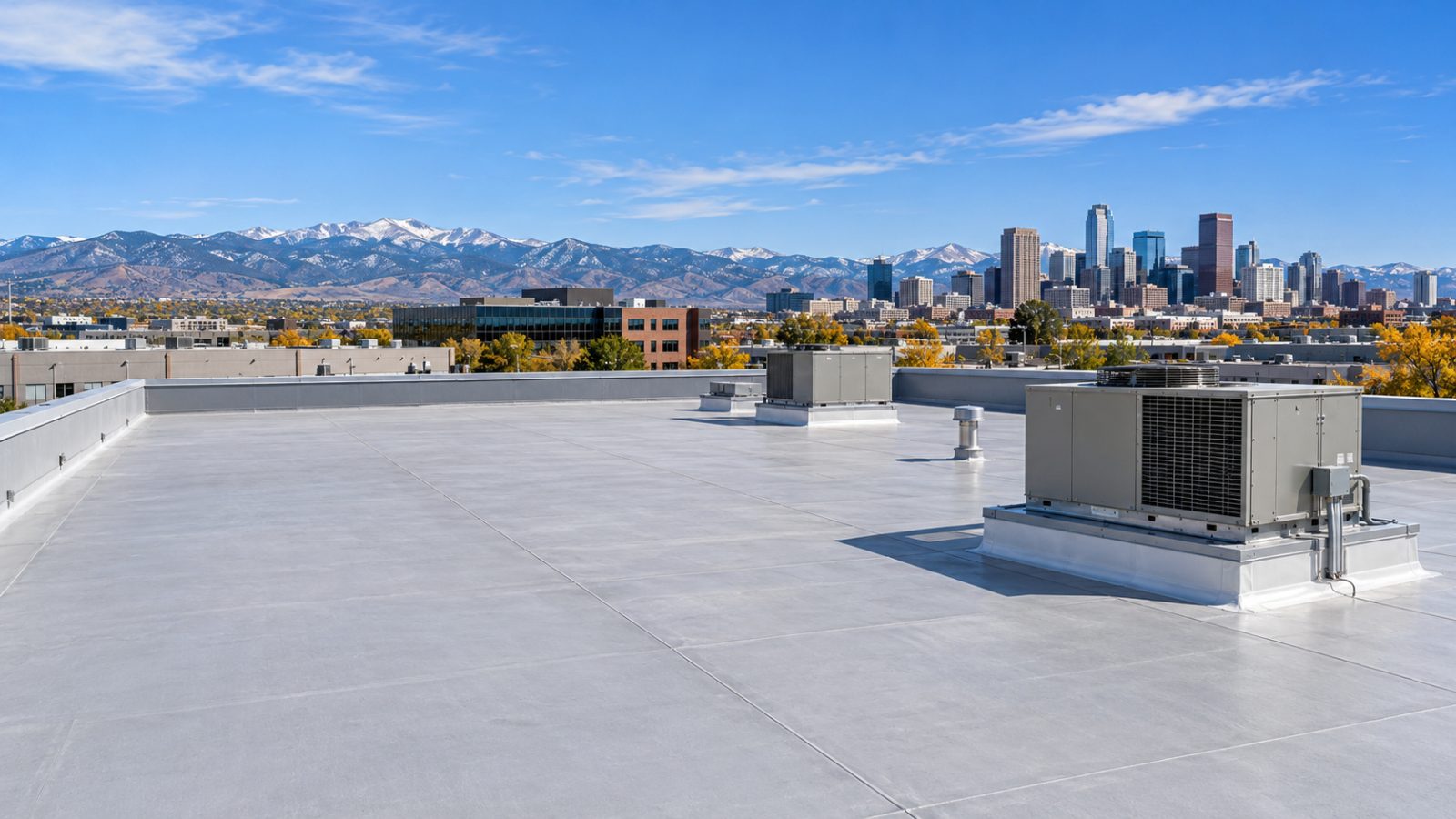
A commercial roof inspection helps property owners understand the condition of their roofing system before problems become more disruptive. Visible deterioration, damaged flashing, drainage deficiencies, and membrane defects can often be identified before significant interior damage develops.
Denver Commercial Roofing Pros helps businesses evaluate roofing concerns related to maintenance, severe weather, property transactions, and future replacement planning.
When Should You Arrange a Commercial Roof Inspection?
Spring and fall are useful times to evaluate many commercial roofs in Denver. Spring inspections can identify concerns following winter weather, while fall inspections help property owners prepare for snow and freezing temperatures.
Additional evaluations may be appropriate after hailstorms, strong winds, rooftop equipment installation, or the appearance of unexplained interior moisture.
What an Inspection Can and Cannot Tell You
A visual roofing inspection can identify many accessible defects and conditions that deserve further attention. However, concealed moisture, hidden structural damage, and underlying assembly conditions may require additional testing or specialist evaluation.
Understanding the limitations of an inspection is important when making major roofing decisions.
Denver Commercial Roofing Pros Is Proud to Serve Denver, CO
What We Consider During Commercial Roof Inspections
An effective roofing assessment examines the components that work together to protect the building and identifies conditions that may require maintenance or further investigation.
Roof Membrane Condition
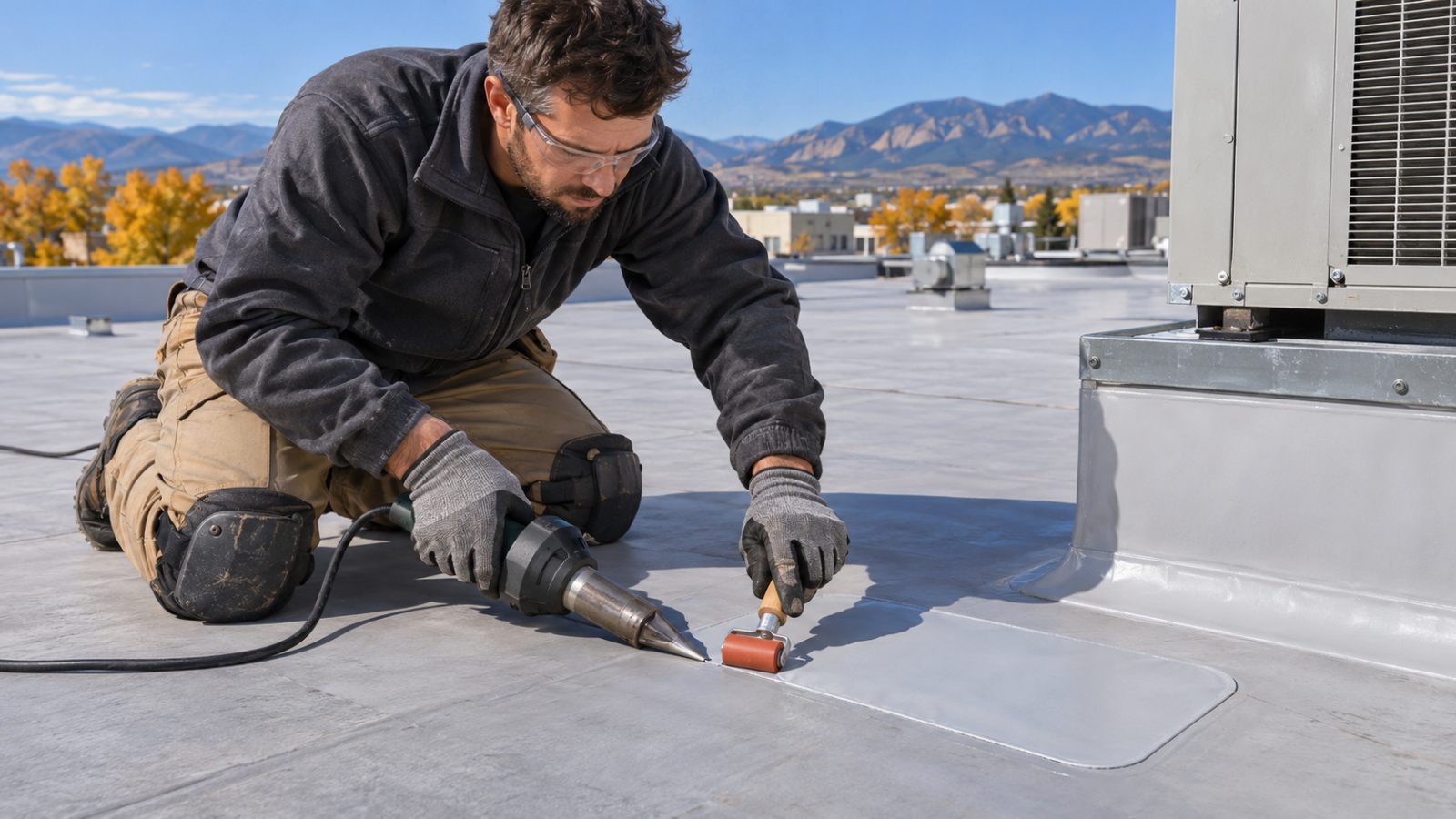
The visible roofing membrane is evaluated for punctures, tears, deterioration, open seams, and other apparent defects. Surface changes may provide useful information about weather exposure and the roof's overall condition. Not every visible irregularity indicates an immediate failure. Findings should be considered alongside the roofing material, surrounding conditions, and any known history of water intrusion.
Drainage and Standing Water
Roof drains, scuppers, and drainage pathways are important parts of a commercial roofing inspection. Obstructions, damaged connections, and evidence of persistent ponding may indicate conditions that deserve attention. Water stains and debris patterns can sometimes reveal where water collects even when the roof is dry. Additional investigation may be needed when drainage concerns appear related to the underlying roof configuration.
Flashing and Penetration Details
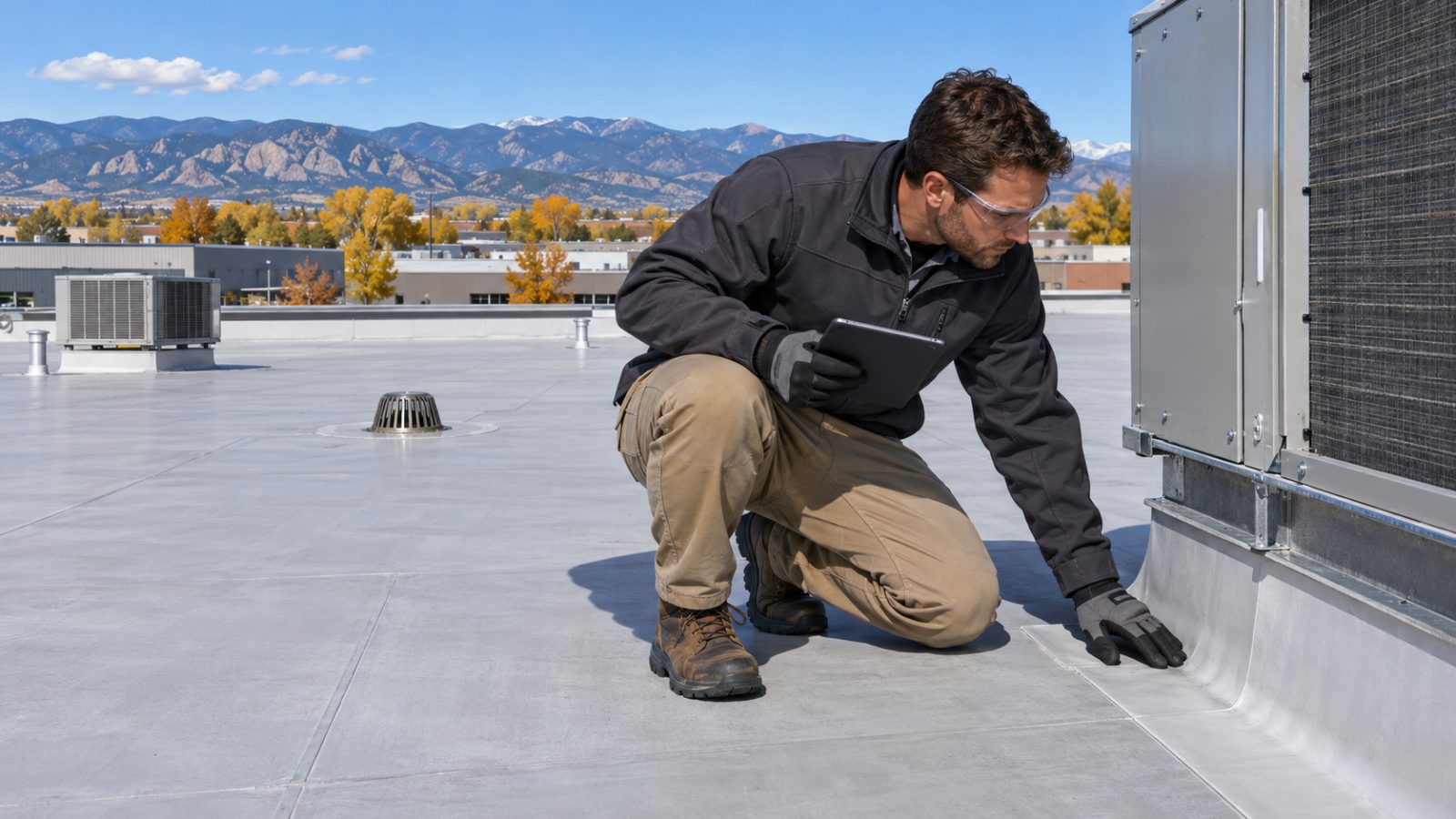
Flashing around walls, vents, pipes, equipment curbs, and roof edges helps prevent water from entering at transitions. These details are evaluated for visible deterioration, separation, and other signs of compromised protection. Because commercial roofs often support numerous mechanical components, equipment-related penetrations deserve particular attention. Recent mechanical work can also provide useful context when investigating newly developed roofing problems.
Post-Storm Roof Assessments
Hail and strong winds can affect roofing membranes, flashing, metal components, and rooftop equipment. A post-storm inspection helps identify visible damage and conditions that may require repair or further evaluation. Documentation of observed conditions can support maintenance planning and communication with other parties. An inspection does not independently determine insurance coverage or guarantee that every concealed defect has been identified.
Roof Maintenance and Replacement Planning
Commercial property owners benefit from understanding which roofing concerns require immediate attention and which can be monitored through ongoing maintenance. Inspection findings can help establish priorities for future work. When widespread deterioration is present, further evaluation may be appropriate before selecting a repair, restoration, or replacement approach. The objective is to support informed property management decisions.
Why Choose Us for Commercial Roof Inspections?
Practical Condition Assessments
We focus on roofing conditions that affect waterproof protection and future maintenance decisions.
Local Weather Considerations
Hail, snowmelt, ultraviolet exposure, and temperature changes inform our approach to roof evaluation.
Clear Explanation of Findings
Property owners should understand what was observed and why it matters.
Appropriate Next Steps
We distinguish visible findings from conditions that may require additional testing or specialist assessment.
Discuss Your Roofing Project
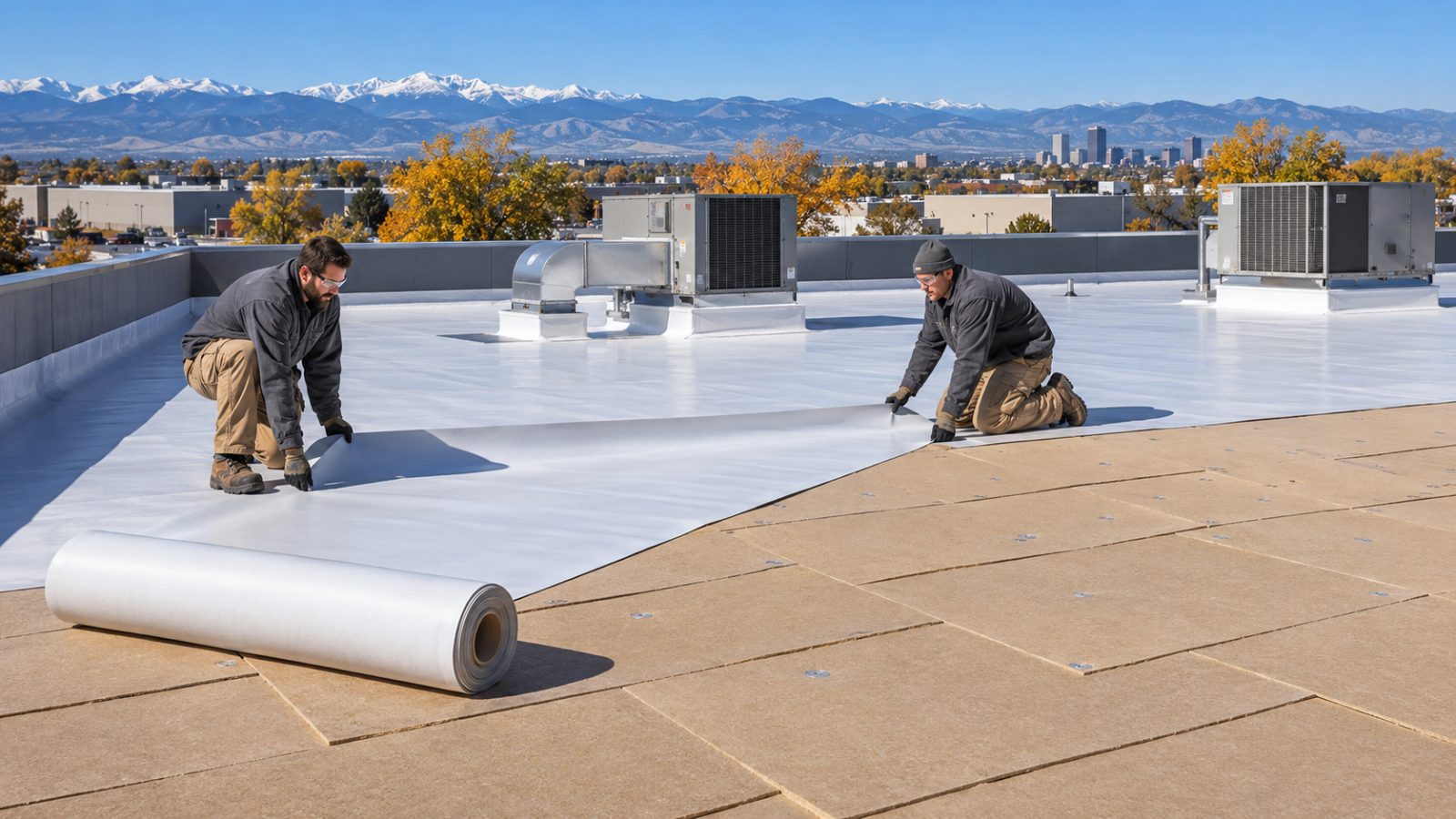
Understand your commercial roof before making your next maintenance or replacement decision.
Discuss scope and terms before authorizing work.
Our Commercial Roof Inspection Process
Discuss Inspection Goals
Identify whether the evaluation concerns maintenance, active leaks, storm damage, or future roofing work.
Review Available Roof Information
Consider known roofing materials, maintenance records, previous repairs, and building access.
Evaluate Accessible Roof Components
Review visible membrane conditions, drainage, flashing, penetrations, and other relevant details.
Explain Observed Concerns
Discuss identified conditions, potential implications, and any limitations of the assessment.
Establish Next Steps
Consider maintenance, repairs, additional investigation, restoration, or replacement where appropriate.