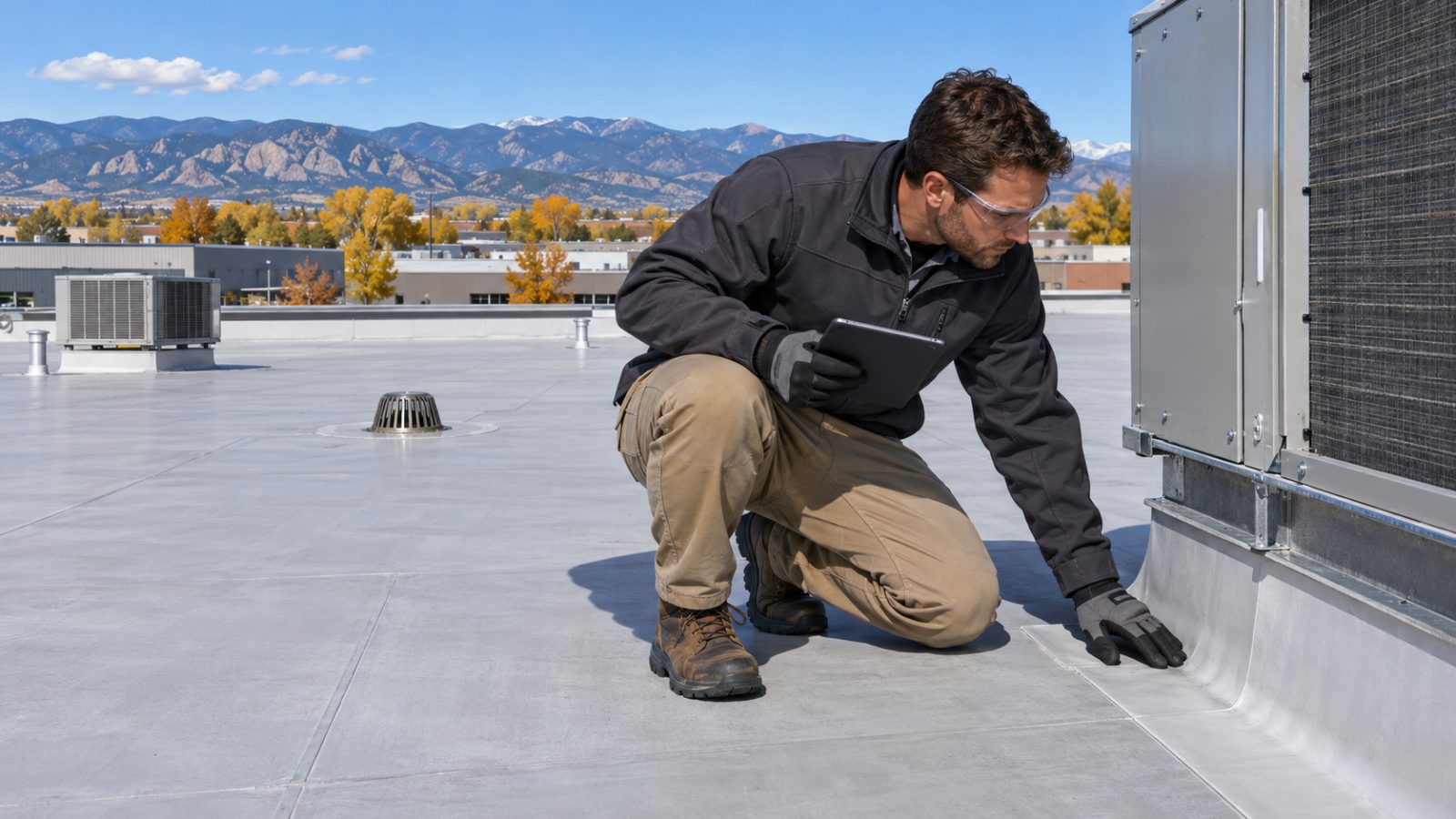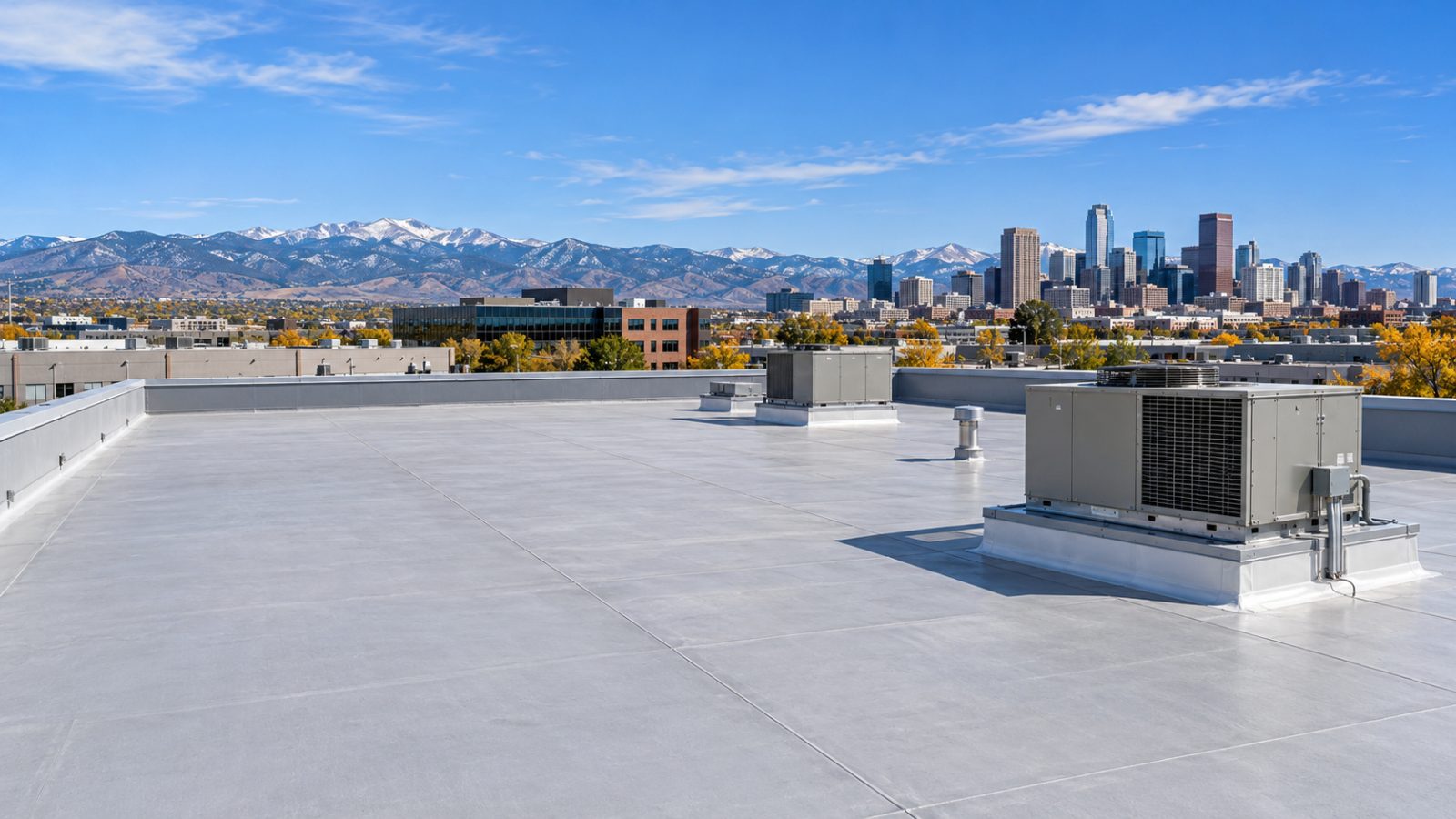
Solutions for Low-Slope Commercial Roofs
Flat Roof Repair in Denver, CO
Find a practical solution for your flat roof. Request a Roofing Estimate
Address Flat Roof Problems at Their Source
Flat commercial roofs rely on continuous waterproof roofing materials and functional drainage systems. When seams separate, drains become obstructed, or membranes sustain damage, water can enter the roofing assembly and affect the building below.
Denver Commercial Roofing Pros helps property owners evaluate and address flat roof problems throughout the Denver area. We consider the roofing material, drainage configuration, and extent of deterioration before discussing repair options.
Why Flat Roofs Develop Leaks
Unlike steep-slope roofs, flat and low-slope systems do not shed water as quickly. They depend on subtle slopes, internal drains, scuppers, and properly detailed waterproofing to manage precipitation.
Denver's alternating snow, sunshine, and freezing temperatures can create repeated cycles of melting and refreezing. Water may collect around drains or low areas, exposing weaknesses that remain unnoticed during dry weather.
Standing Water Is a Warning Sign
Persistent ponding can indicate obstructed drainage, compressed insulation, structural deflection, or inadequate roof slope. Applying a patch without addressing the reason water collects may leave the roof vulnerable to continued deterioration.
If you notice water remaining on your roof after surrounding surfaces have dried, arrange an evaluation rather than attempting to modify the drainage system yourself.
Denver Commercial Roofing Pros Is Proud to Serve Denver, CO
Flat Roof Repair Services
Effective flat roof repair requires an understanding of both the waterproofing material and the way water moves across the roof.
Flat Roof Membrane Repairs
Punctures, cuts, and worn membrane areas can allow water to enter a flat roofing system. Damage may result from maintenance activity, debris, aging materials, or severe weather. Repair techniques must match the existing membrane. A repair suitable for TPO may not be appropriate for EPDM or modified bitumen. Identifying the material and preparing the affected surface are important steps toward a compatible repair.
Ponding Water Evaluation
Water that collects in low areas places additional demands on the roofing membrane. Persistent ponding may also contribute to debris accumulation and deterioration around vulnerable seams. An evaluation considers drainage pathways, the location of low areas, and visible changes in the roof surface. Some conditions can be addressed through drainage maintenance or localized corrections, while others require broader design or structural evaluation.
Roof Drain and Scupper Repairs
Drains and scuppers provide essential routes for water to leave a flat roof. Damaged connections, deteriorating waterproofing, and obstructions can interfere with their performance. Repairing these areas requires attention to the transition between the roofing membrane and drainage components. The surrounding roof condition should also be assessed because water may enter beneath the membrane near a compromised drain.
Flat Roof Seam Repairs
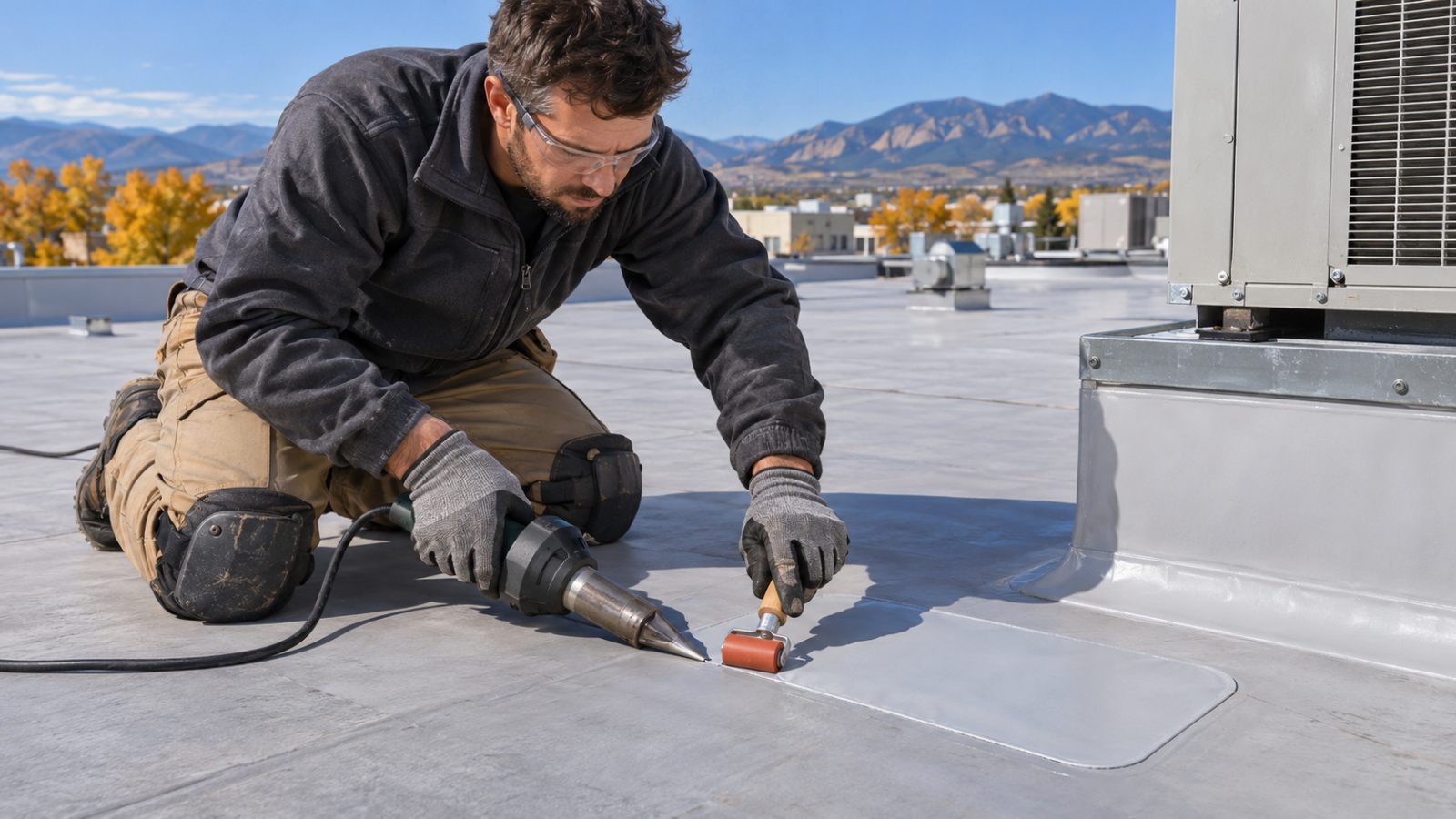
Membrane seams are critical waterproof connections. Weather exposure, material movement, and deterioration can cause some seams to lose their integrity over time. The appropriate repair depends on the membrane type and condition of the existing seam. Restoring the connection may involve compatible patches, approved adhesives, or heat-welding techniques where appropriate.
Parapet and Equipment Curb Repairs
Flat commercial roofs frequently terminate against parapet walls and surround raised equipment curbs. These transitions must remain waterproof while accommodating movement between building components. Deteriorated flashing or poorly protected termination points can allow water to enter even when the main membrane appears sound. Evaluating these details helps identify repair needs that might otherwise be overlooked.
Why Choose Us for Flat Roof Repair?
Drainage-Focused Evaluation
We consider how water moves across the roof and where it may collect.
Membrane-Specific Repairs
Repair recommendations reflect the existing roofing material and its condition.
Attention to Roof Transitions
Drains, walls, equipment curbs, and other vulnerable details are important parts of the evaluation.
Practical Repair Planning
We distinguish between localized damage and broader problems that may require additional corrective work.
Discuss Your Roofing Project
Get help understanding why your flat roof is leaking or holding water. Contact us to discuss your commercial property.
Discuss scope and terms before authorizing work.
How We Approach Flat Roof Repair
Gather Information
Discuss visible leaks, standing water, previous repairs, and the building's roofing history.
Evaluate the Roof Surface
Assess membrane condition, seams, penetrations, drainage, and accessible flashing details.
Identify the Repair Requirements
Determine whether localized waterproofing repairs or additional drainage investigation may be needed.
Plan Compatible Repairs
Select repair methods appropriate for the existing membrane and surrounding roofing assembly.
Discuss Ongoing Maintenance
Review drainage maintenance and other conditions that may influence future roof performance.